Raised Patterns in Cut Velvet: How to Judge Surface Relief

Judge a raised pattern in the cut-velvet range by separating its visible motif from the surface relief you can feel on a physical sample. We review the pattern at the intended viewing distance, then inspect the raised and lower areas in the proposed application. A photograph may show strong depth because of its lighting; it cannot establish the exact height, handle or behaviour of the surface by itself.
What does surface relief mean for pattern selection?
Surface relief is the visible or tactile difference between raised and lower fabric areas. A clear colour pattern does not necessarily have strong relief, and shadows can exaggerate depth in a photograph. Decide whether the project mainly needs a visible motif, a tactile texture or both.
Our catalogue presents 273-6 Raised-Yarn Wavy Jacquard as a raised-wave reference within the cut-velvet collection overview. We use it here to discuss the surface pattern. Confirm its complete construction for the project rather than assuming that every raised reference in the range is made by the same process.
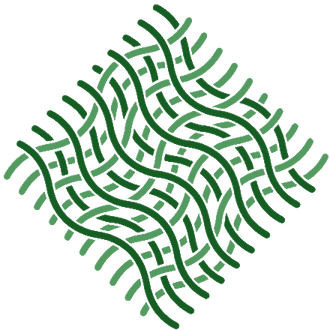
Inspect the wave edges and the quieter areas between them in the image below. Notice where the photograph makes the surface difference easiest to see.

How do you distinguish texture from colour contrast?
Distinguish relief from colour contrast by inspecting and touching the same physical fabric areas while changing the viewpoint. A dark line may be yarn colour, shadow or both. Record where the raised boundary can actually be felt, rather than reading every dark photographic edge as depth.
Record the visual and tactile observations separately. “The wave is easy to see from the front” and “the wave can be felt clearly by hand” answer different questions. One does not automatically establish the other.
| Observation | What to inspect | Buyer decision it supports |
|---|---|---|
| Motif visibility | Overall pattern at the intended distance | Whether the design reads clearly in context |
| Raised-to-lower transition | The boundary on the physical surface | Whether the texture has the intended character |
| Contact feel | Actual sample handling | Whether the tactile effect suits the proposed use |
| Change with viewpoint | The same sample from relevant positions | Whether the visual effect remains acceptable |
| Edge and seam appearance | A representative assembled trial | Whether making interrupts the intended surface pattern |
This is a selection framework. It does not assign numerical limits to relief or substitute for an agreed performance requirement.
Why should the viewing distance be part of the brief?
For a raised fabric pattern, viewing distance determines which design question to ask: recognition of the broader motif or appreciation of close texture. Assess the selected sample from the position relevant to the proposed cushion, headboard or panel. Close photography alone may overstate an effect seen across a room.
For a hypothetical headboard brief, distinguish two requirements: a wave visible from the normal room position and a textured surface appreciated up close. The observation record can accept one and leave the other open.
| Viewing or handling condition | Hypothetical observation | Interpretation |
|---|---|---|
| Intended room position | Broad wave rhythm is clear | Supports the visual requirement |
| Close inspection in changed light | Dark edge changes but the same ridge remains | Separate the shadow from the physical boundary |
| Hand contact | Ridge is noticeable but quieter than expected | Reconsider the tactile requirement, without discarding the accepted motif |
| Representative assembled area | Not yet reviewed | Keep seam and edge appearance open |

The schematic is illustrative and has no dimensional scale. It explains why a photographic highlight cannot supply a relief-height measurement. For this brief, the next enquiry concerns texture and assembled appearance, not automatically added yarn or a heavier specification. State which requirement is still unmet so a different construction is discussed for a clear reason.
The further view below shows the same reference in several pictured colour directions.

Use it to locate the wave motif and discuss visual preferences. It is not a stock confirmation or a controlled comparison of identical textures under identical lighting.
Does a stronger raised effect mean a fuller or heavier fabric?
Apparent relief in a photograph does not establish a fabric's mass per area or complete handle. Review the wave pattern for its visible and tactile effect, and review any request for extra body as a separate sample choice. Accepting a motif does not approve every construction that uses it.
The added-yarn option described on our cut-velvet fabric page is one route to discuss for selected references. This article's decision is narrower: whether the raised pattern itself gives the visual and tactile expression required. Accepting a wave motif does not automatically approve an added-yarn version or its final specification.
Keep any required abrasion, seam, care or other performance evidence separate from the texture review. A sample can look and feel appropriate while still needing verification for a particular application.
What should you include in a texture enquiry?
A raised-pattern enquiry should state the required effect and viewing context: a motif readable across the room, a texture noticed at hand distance, or both. Send the application, panel dimensions, intended viewing positions and quantity with an exact reference from our cut-velvet collection.
If you have a sample, include its identifier and mark the areas you want to discuss. Use WhatsApp RFQ to review the selected reference and the next physical sample requirements. We confirm the suitable route and commercial terms directly, with texture approval tied to the material actually reviewed.


